
A Nevadan Family and the Spirit of Preservation
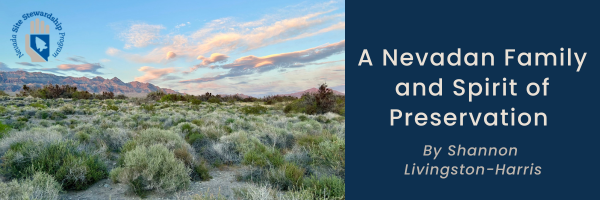
Standing near the Corn Creek Visitor Center, I observe my husband Cory gently secure our four-month-old daughter against his chest in a baby sling, her sleeping face hidden beneath a wide-brimmed, flowered hat. We’re north of Las Vegas in the Desert National Wildlife Refuge, an area infused with the traditional lifeways of the Nuwuvi people. On this late spring afternoon, we venture into the refuge as a family and as site stewards, ready to monitor and protect the refuge’s cultural treasures.
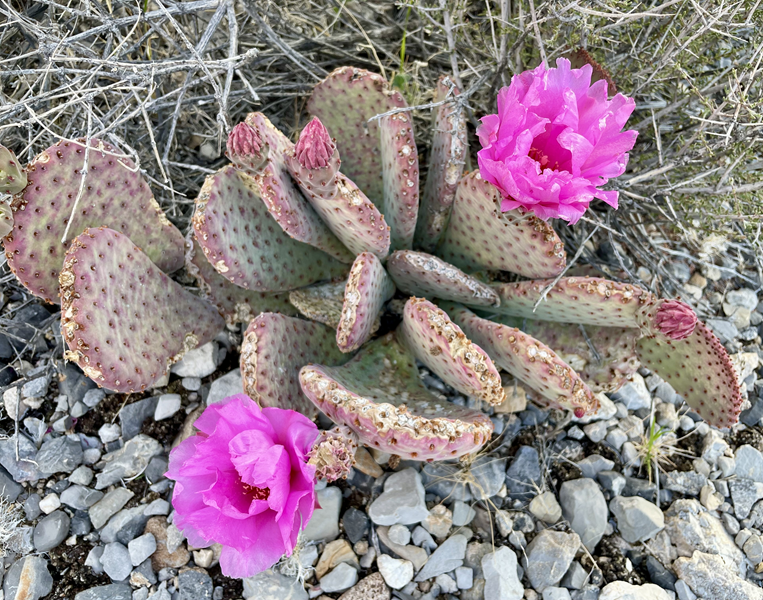
On the valley floors, saltbrush thrives in saline soils and cool nights, its humble resilience reflected in subdued hues that merge into the desert landscape. As we hike to slightly higher elevations, the terrain transitions into open scrubland, where creosote bushes, yucca, Mormon tea, and the pink blossoms of beavertail cacti create a sparse yet vibrant community. This area, receiving less than five inches of annual rainfall, illustrates nature’s ancient ability to adapt and endure.
Our visit today leads us to a narrow canyon, a space containing two panels of red ocher pictographs. The first, near the canyon’s entrance, features 23 distinct elements, including anthropomorphs, zoomorphs like bighorn sheep, and intricate curvilinear designs. The second panel, found near a dry waterfall, shows a single anthropomorphic figure framed by red dots.
As I stand before the imagery, documenting changes or damage, I’m reminded of ocher’s deeper significance. This mineral absorbs the land’s transformations over eons, and for Indigenous people like the Nuwuvi, ocher is the lifeblood of cultural expression—a critical link to their ancestors, present identity, and future generations. When ocher is extracted and combined with other elements to create pigment, it’s imbued with the land’s memory and the lineage of its people, holding the tangible spirit of all that is sacred. This essence is why ocher is used to tell stories, perform ceremonies, paint the skin, and serve as a tool for healing.
I feel these truths reverberate through my body as I stare at the pictographs. These images are imprints of the human spirit, stories told through the land itself.
I look at my daughter, still asleep on Cory’s chest, and consider the lesson of legacy the pictographs seem to impart. Just as these red ocher symbols connect an Indigenous people across generations, our role as stewards forges a similar bond, linking us to posterity. Stewarding the land together is a shared mission, one where we can instill values of ecological care and respect in our daughter. This responsibility offers us the chance to preserve historical spaces and ensure that young Nevadans, like my daughter, remain connected to the land’s cultural knowledge and natural integrity.
As we walk together, surrounded by the refuge's expansive beauty, I know the vital role we play as stewards of this region. Our efforts today, from documenting the red ocher pictographs to hiking the terrain, allow the environmental and ancestral stories etched into the landscape to continue speaking to future generations. The connections between the land, local heritage, and family are inseparable, and through our stewardship, we pass on these connections to our daughter, grounding her in the sacred earth beneath our feet.
.jpg)