
Falling in Love with the Desert
When you’re married to active-duty military, there’s no way of knowing where you’ll end up half of the time. So, when my husband told me over five years ago that our next destination was going to be Las Vegas, NV, I wasn’t quite sure what to make of it. We both grew up around Orlando, FL, and have been accustomed to tourism and big cities (as well as lakes and beaches). Still, we weren’t quite sure what to think of our new home—there’s the Strip, there’s gambling, there’s dinner shows, but what else do we have to look forward to?
Funnily enough, quite a lot!
In the last few years, I’ve come to understand and appreciate the unique archaeological landscape here in Nevada. A job in the collections department of the Clark County Museum had been my first step in familiarizing myself with the historic side of the state. A wide variety of objects and archives had passed my desk, which meant taking the time to research the what, the where, the when, and the why to properly catalog everything.
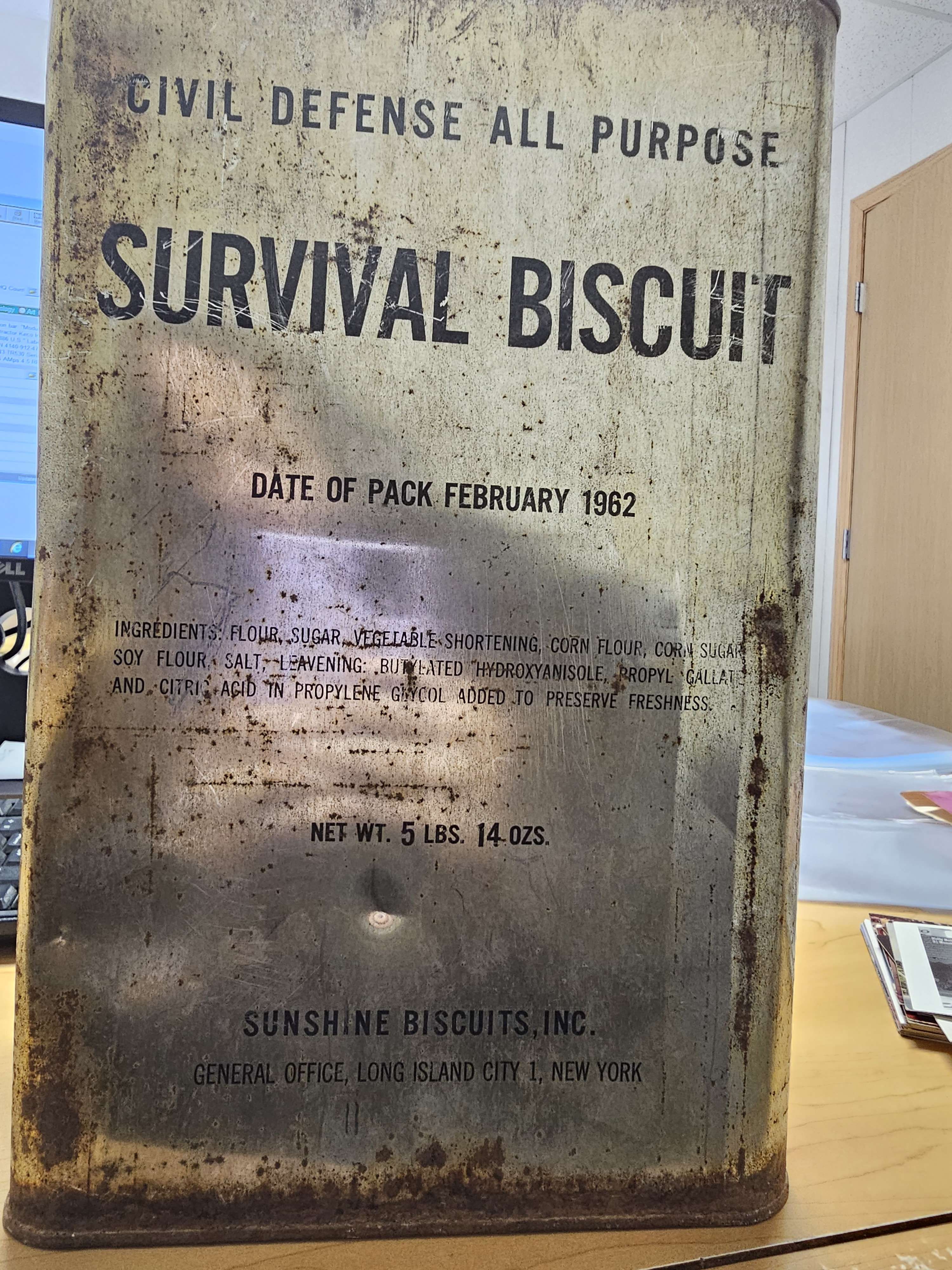
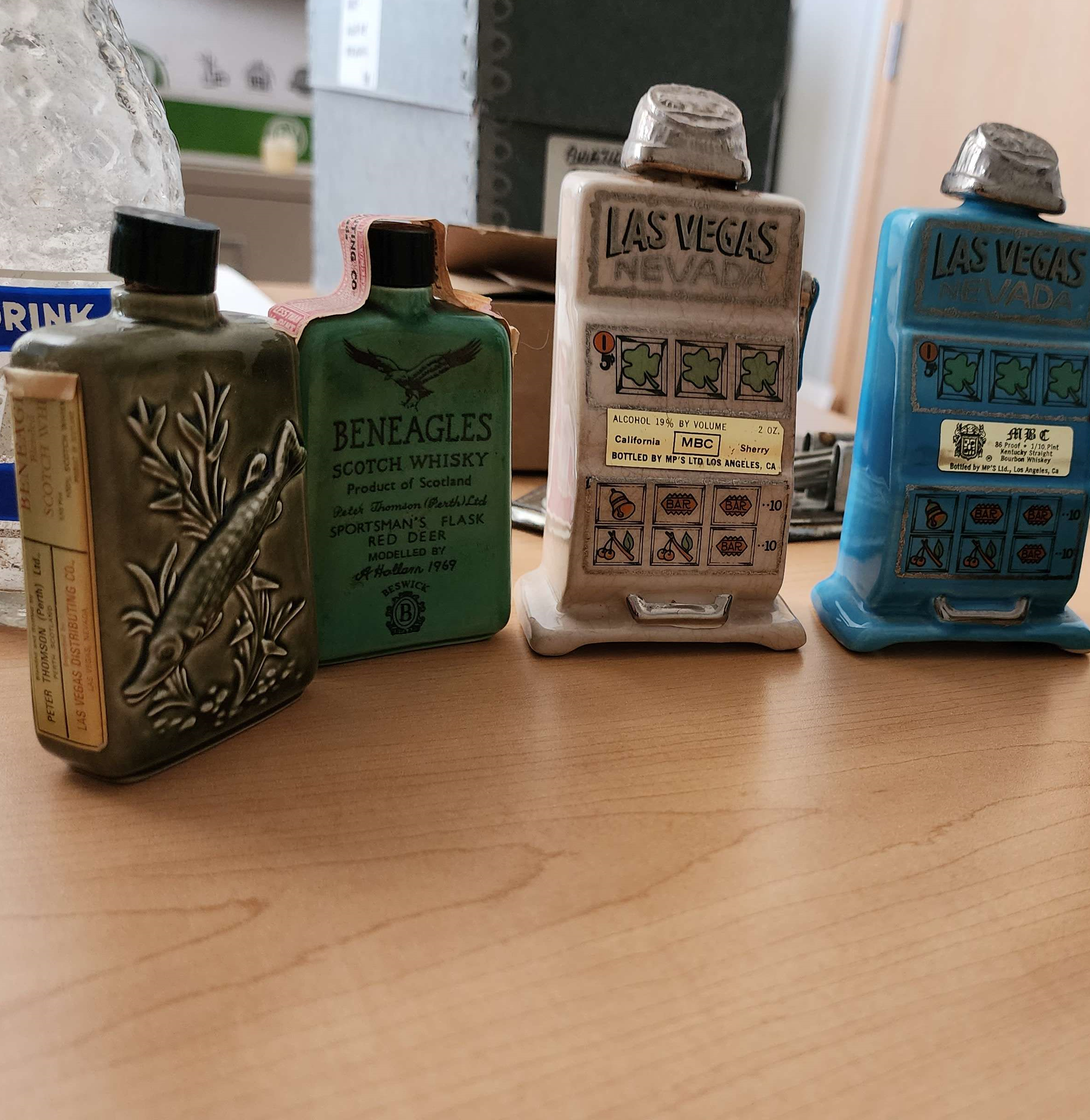
Left: Civil Defense All Purpose Survival Biscuit, date of pack February 1962, part of the Arden Civil Defense Bunker collection. Right: Ceramic flasks in a variety of styles. Personal images. Items from the Clark County Museum, Henderson, NV.
Anything from atomic bunker supplies to Las Vegas civil engineering projects, to the revolving door of casinos and attractions, to the multitudes of mining companies—real and fraudulent—looking to strike rich across the land. Without a doubt, each week, I had learned something new, eager to share with friends and family.
The work I have been able to do with Samantha Rubinson through the Nevada Site Stewardship Program added yet another layer. The pre-contact era, long before Spanish and Anglo-American settlers first passed through the state. Ancient peoples who lived and thrived all over the landscape, no matter the climate.
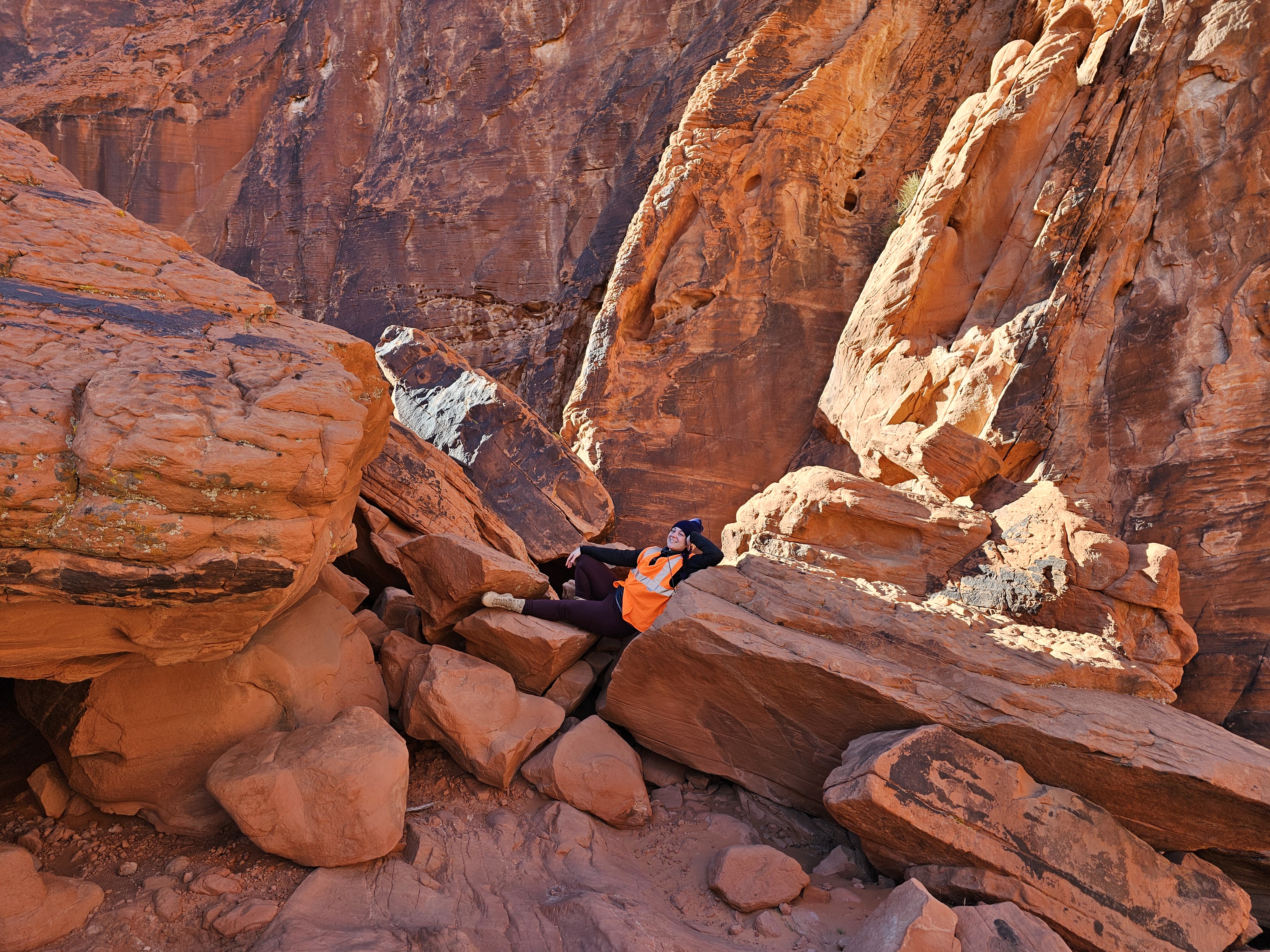
Picture taken during UNLV/CSN Valley of Fire Field School, 2024. Personal image.
They lived in rock shelters, adobe homes, or wickiups. They created distinctive pottery and basketry, both beautiful and functional. They left their mark through rock inscriptions, decorating significant spaces whether set high on a cliff face or hidden amongst low-lying boulders. They hunted, gathered, and farmed with meticulously crafted tools. Humans’ ability to adapt and survive has always fascinated me; I wouldn’t have gotten my masters in anthropology if it hadn’t!
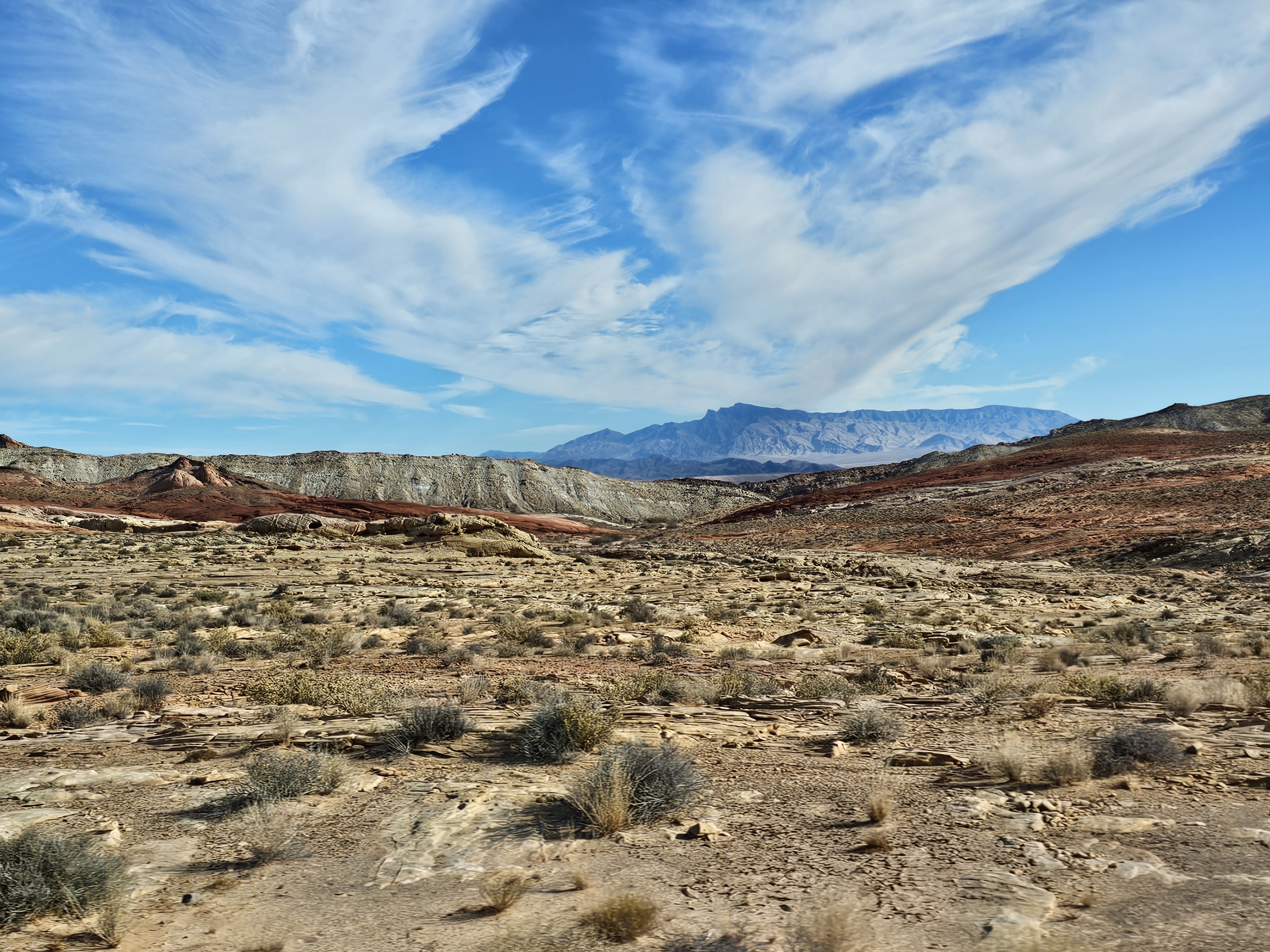
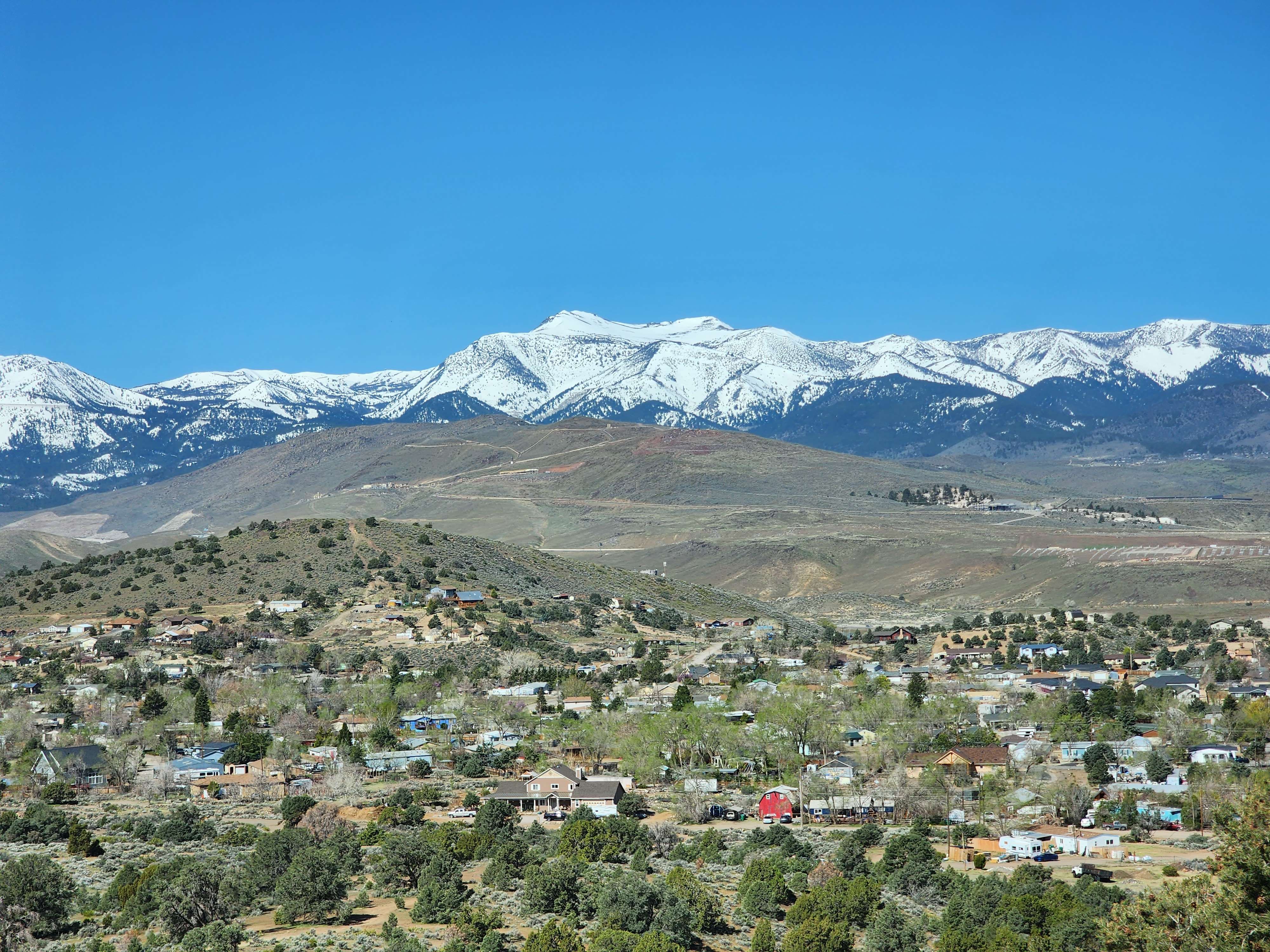
Left: Valley of Fire State Park. Right: Sierra Nevada Mountains from Virginia City Highlands. Personal images.
While most of my time has been spent in the southern half of the state, I’ve had some opportunities to venture north and see the shift from sandstone and dunes to snow-capped mountains and dense forests. Layers upon layers of rock inscription panels that scale cliff faces, beautiful architecture that takes you back in time, the stark remnants of mining towns that ran out with the ore. Tens of thousands of years of human history and all of it continues to be awe-inspiring and thought-provoking no matter how many times I come across it.
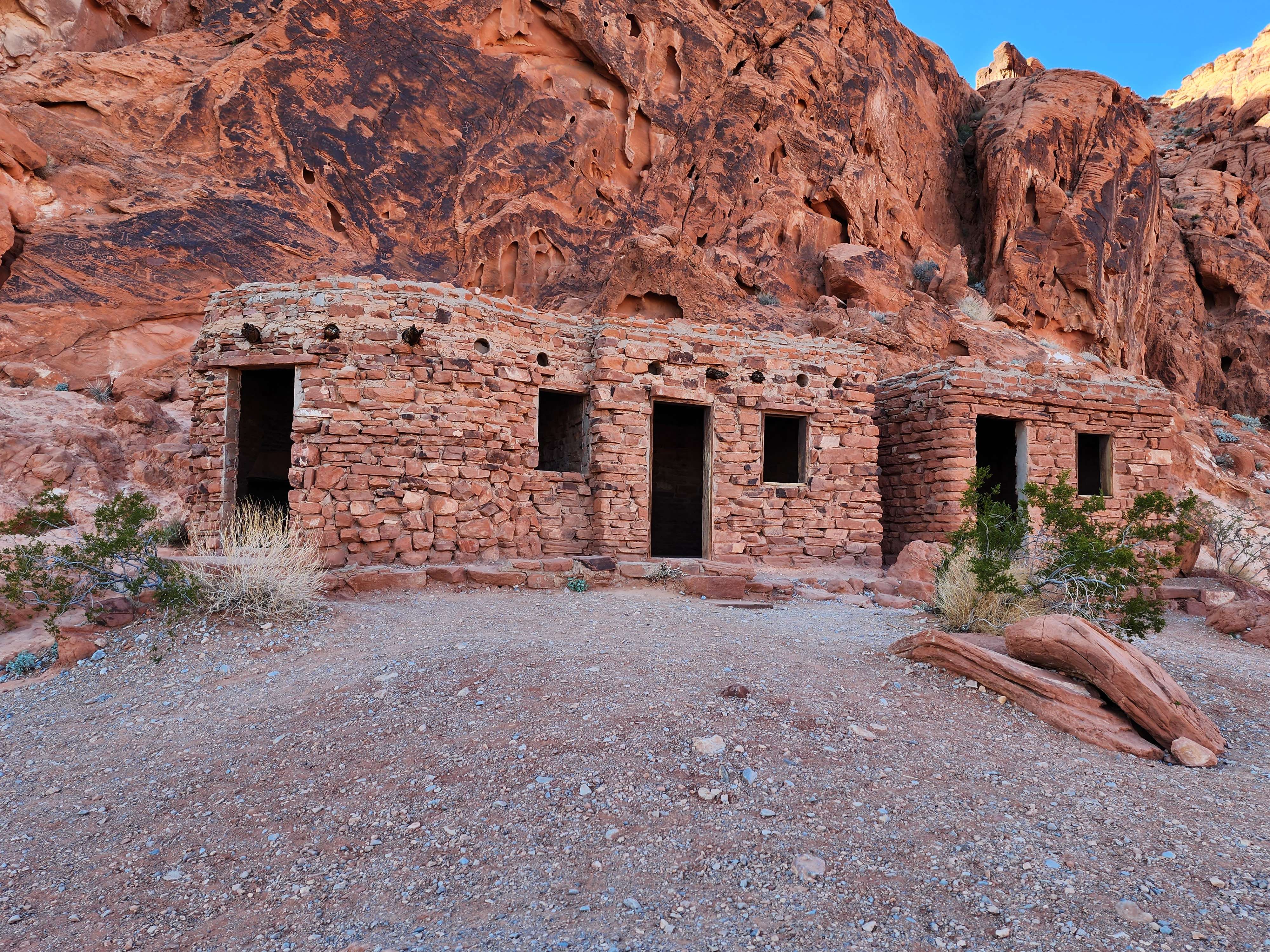
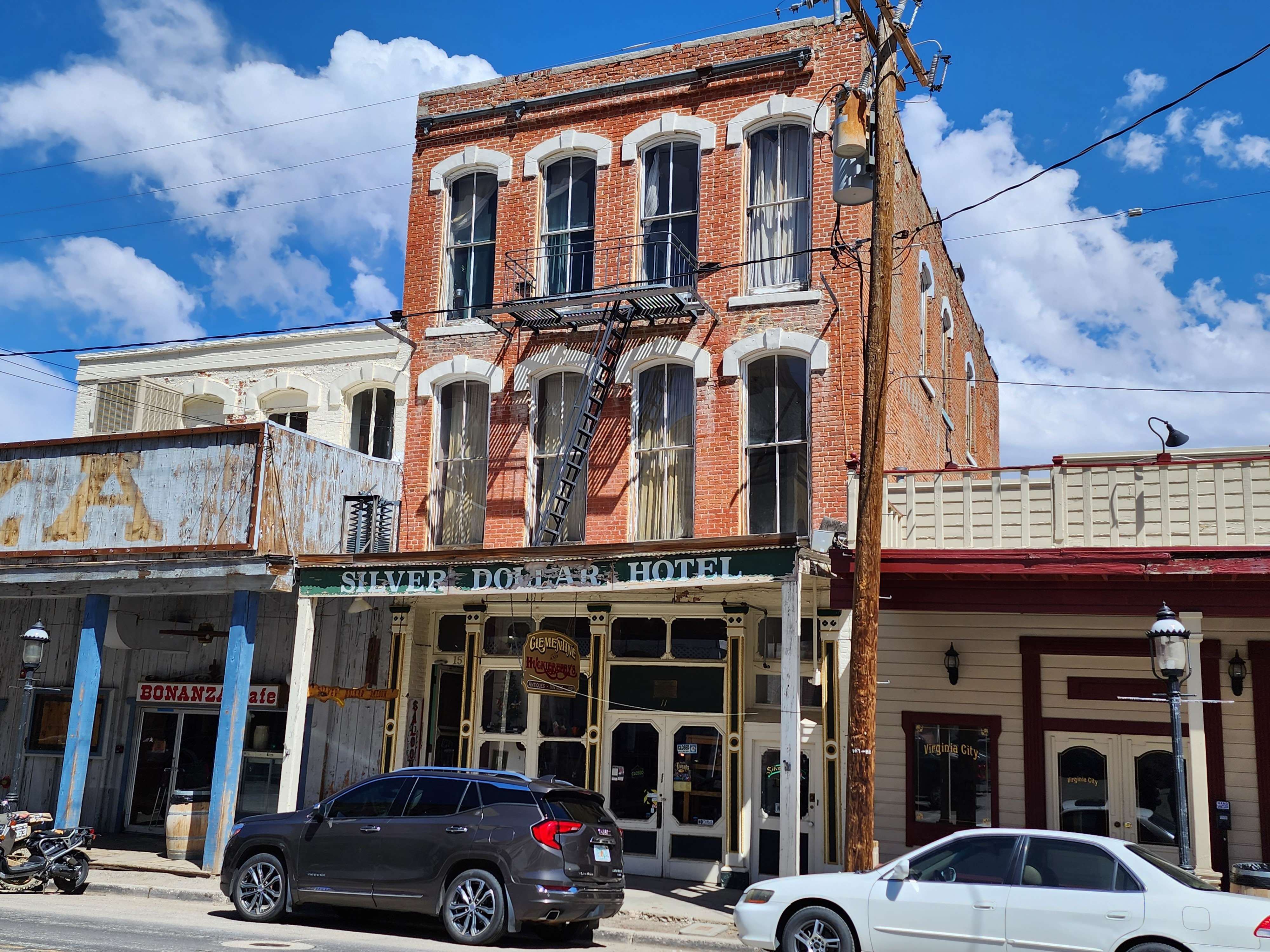
Left: The Cabins, Valley of Fire State Park. Right: Virginia City, NV. Personal images.
It makes protecting and preserving this exceptional cultural landscape beyond invaluable, and I’m grateful to be part of it.