
Cultural Spotlight: Basque Sheepherders of Nevada
The Basque, or the Euskaldunak, are the oldest surviving ethnic group in Europe, considered to be direct descendants of ancient Iberians who migrated from North Africa into the Iberian Peninsula between 4,000 and 8,000 years ago. They hail from the Basque Country, a region situated on the border between Spain and France in the Pyrenees Mountains. Their language, Eusk or Euskara, is classified as a language isolate. It is the only surviving descendant of the Paleo-European languages, relating to none of the Romance languages geographically surrounding their country.
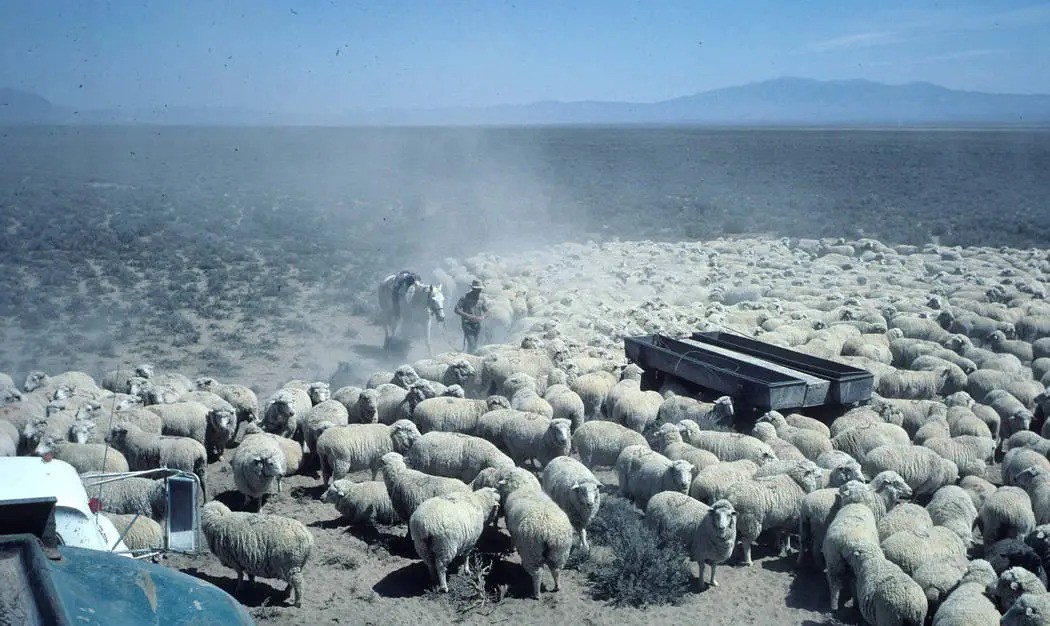
Basque sheepherders deliver water to flock. Photographer: Richard H. Lane. Image Source: University of Reno, Jon Bilbao Basque Library Collections, https://unr.dgicloud.com/node/3790.
During the mid-1800s, they immigrated into the United States, having left their home country due to the Carlist Civil Wars in Spain. This migration was bolstered by the prospects of the 1849 California Gold Rush. However, gold mining wasn’t as fortuitous as initially thought, so the Basque found better income by raising sheep to sell meat and wool to the gold miners. The Homestead Act of 1862 provided the Basque with the opportunity to claim whole stretches of land for their communities and their sheep.
Sheepherding is a lonely life, with typically one herder, a couple of dogs, and hundreds (if not thousands) of sheep. Sheepherders were continuously on the move throughout much of the Great Basin area, settling between California, Nevada, Idaho, and Oregon. The lifestyle was at risk during both World War I and World War II, with many of the Basque sent away due to the draft. By the 1970s, sheepherding had diminished significantly.
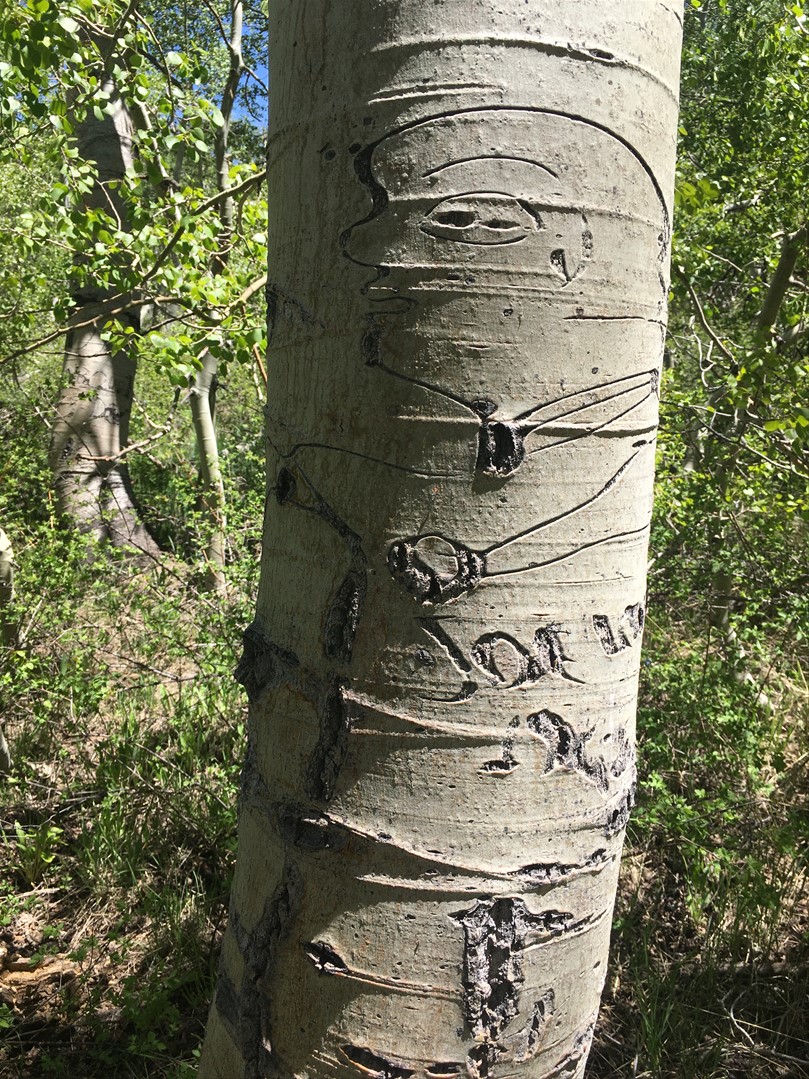
Examples of Basque arborglyphs.
Image Source: Nevada Site Stewardship Program.
A unique part of the Basque sheepherding culture were arborglyphs, or tree carvings, left behind on the soft bark of aspen trees. It was a method of communication, sharing news, gossip, directions, and even “old country” crude humor. The artistic style is noticeably distinct from modern-day graffiti, with sweeping curves, single-stroke marks, and turn-of-the-century caricatures and cartoons.
Prominent, close-knit Basque communities still thrive today in Elko and Winnemucca. These towns had historically been local hubs for the sheepherders, using boarding houses like The Martin Hotel and the J.T. Basque House. Basque Clubs can be found in Nevada, California, Idaho, and Oregon, and the National Basque Festival is held annually in Elko.
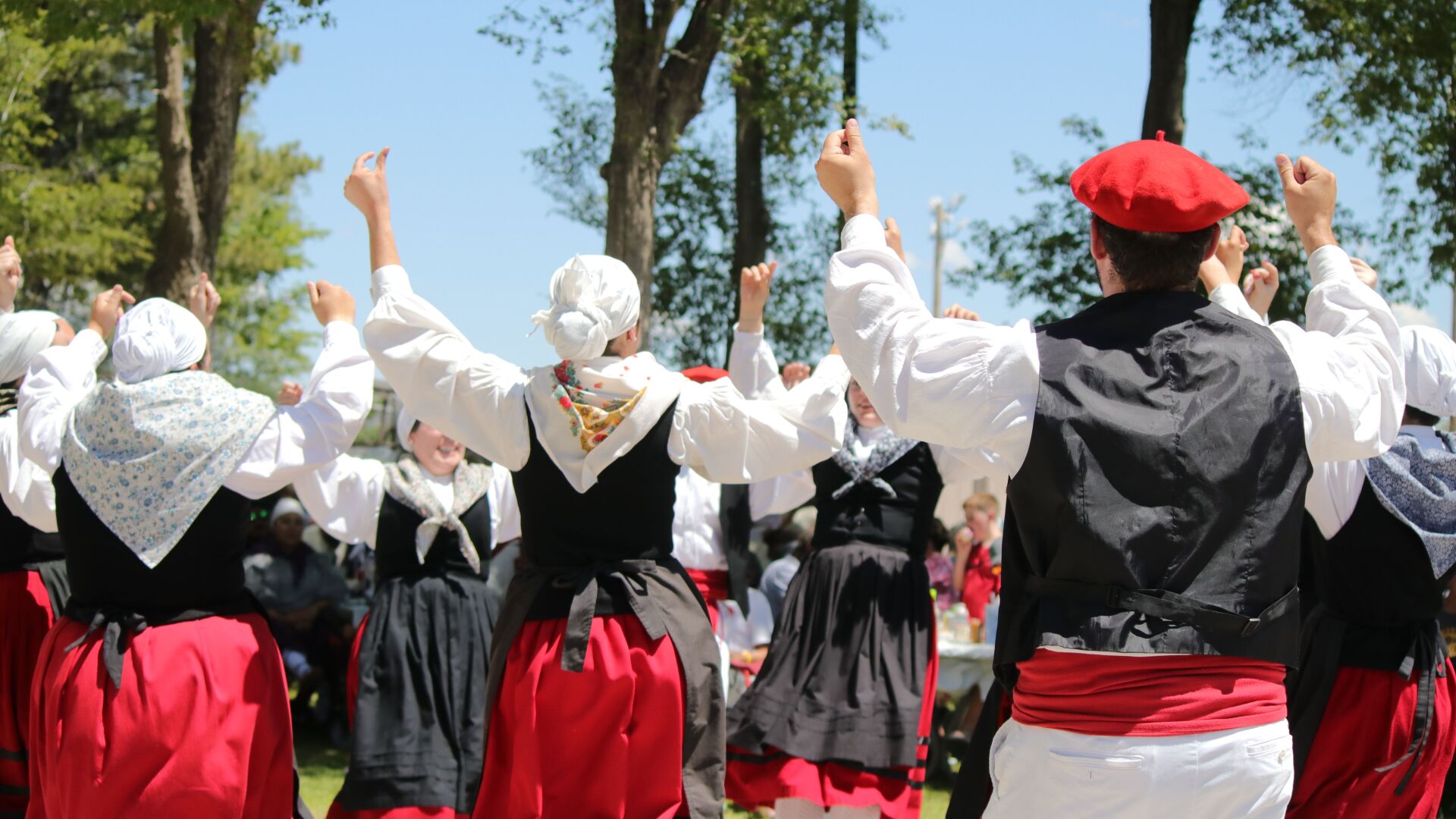
61st National Basque Festival. Image Source: Elko Daily Free Press
https://elkodaily.com/collection_5bc39a73-7ea8-459a-96e6-1f7788de4cb8.html
Link to Elko National Basque Festival: https://exploreelko.com/top-events/national-basque-festival/